


MORPHEUS
Do you want to know what it is, Neo?
It's that feeling you have had all
your life. That feeling that
something was wrong with the
world. You don't know what it is
but it's there, like a splinter in
your mind, driving you mad,
driving you to me. But what is it?
In an unnamed future, Neo, a computer programmer by day and hacker by night, goes through the monotony of what he believes to be the grind of his day-to-day existence looking for meaning. Prompted by the sense of an elusive “other,” of something beyond the world in front of him, he searches lines of code hoping to find the answer.

He believes the answer to be centered in a person called Morpheus, an elusive legend, a phantom voice whispered among the internet underground who is believed to have the answers to a greater system called “The Matrix.” The day comes when Neo is called by Morpheus, called out of his mundane existence and given the opportunity to discover “the truth,” to see the world as it really is. Neo discovers what he believed to be reality was nothing but a facade designed to placate and control. Rather than an autonomous agent, he has been nothing more than property, a resource, for a merciless controller. The Matrix highlights the questions of both ethics and imaging.
MORPHEUS
This is your last chance. After
this, there is no going back.
You take the blue pill and the
story ends. You wake in your bed
and you believe whatever you want to believe.
You take the red pill and you stay
in Wonderland and I show you how
deep the rabbit-hole goes.
Remember that all I am offering is
the truth. Nothing more
When Neo first encounters Morpheus, for whom he has been looking for so long, Neo is presented with a choice in the form of two pills: a blue pill and a red pill. Choosing the red pill, Neo sees the unvarnished truth of the world as it actually was. Take the blue, and he continues life as he always had. As Neo reaches for the red pill, Morpheus warns “Remember, all I am offering is the truth. Nothing more.a’[1]
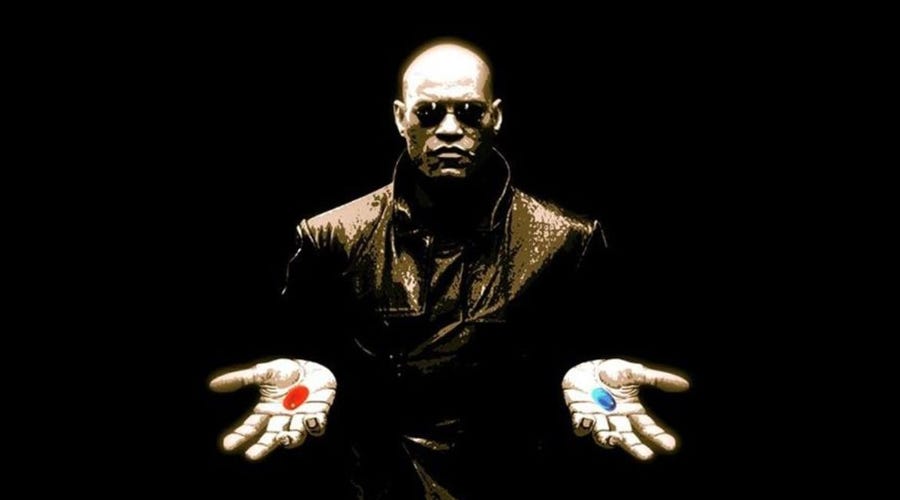
The red pill activates a trace program and Neo discovers that he, as himself, is not actually what he believed himself to be. Rather than a maverick anti-authority computer programmer chasing the limits of the network and bending it to his will, he was in truth a slave to it. The idea he had of himself was a product of a virtual reality system, a “neural interactive simulation,” that controlled every area of his perception. In truth, he was a prisoner trapped in a pod among a field of countless other humans all being harvested for energy to fuel the artificial intelligence that controlled the matrix.
The year was not actually 1997 as Neo believed, but 2197 . . . as far as they knew. The exact details of human history had been destroyed along with the earth in the battle between humans and AI. As Morpheus explained, “It started early in the twenty-first century, with the birth of artificial intelligence, a singular consciousness that spawned an entire race of machines.”[2] This new race wanted the same treatment as humans, at first, the same “inalienable rights,” but “whatever they were given, it was never enough.”
Imago Dei vs Imago Hominis
The relationship between God and man begins with the words in Genesis 1:26, “Let us make man in our own image.” It is this connection that begets the relationship which fuels the desire for a connection with the one we image, as the writer of Ecclesiastes states, “God put eternity into the hearts of man.”[3] It is this imaging that gives us this idea of goodness, of right, and that there is a particular way things should be even though they aren’t, or as Morpheus put it, “that something was wrong with the world.” Why should we think that if corruption, brutality, and exploitation has always been part of the world? How in heavens can we have any expectation of something else unless it is heaven itself that gives us this idea.
This certainty that there is a “should be” is what Thomas Aquinas refers to as the “argument from degree” or a “gradation of being” in his five ways to know God.[4] As each of us is created in the image of God, we have an inner knowing of what is true, beautiful, and right. The fact that we all have an idea, an inner conviction, that a thing “should be” a certain way indicates that there is an ideal to be measured up to. When an artist paints a picture of a person, the way we determine if it is “good” or not is by how well it resembles the person, either in depicting the person exactly or by highlighting a characteristic or trait of the individual. In the same way, a reproduction of a painting is considered to be “good” by how closely it resembles the author's original style and form.
In the same way, Aquinas’s Fourth Way states that we can know the evidence of God because we recognize that there is something that is the standard of perfection. Aquinas’s definition of good in “On Goodness and the Goodness of God” is something that is “properly actual.”[5] For example, if we were to paint a reproduction of Van Gogh’s “Starry Night,” we compare it to the original to say whether it is “good” or not. Aquinas states that we can know there is an actual original that our definition of personal good is based upon. In terms of both things and actions, what is good is defined in terms of relation to the ultimate act or being. This good and bad, more and less like, is referred to as a “gradation of being” in Aquinas’s Fourth Way.[6] Good refers to the perfected, everything else is an approximation or shadow. As Van Gogh’s “Starry Night” is the cause of all the imitations and it is the most, the ultimate, and the perfected; God is the ultimate to which likenesses are compared.
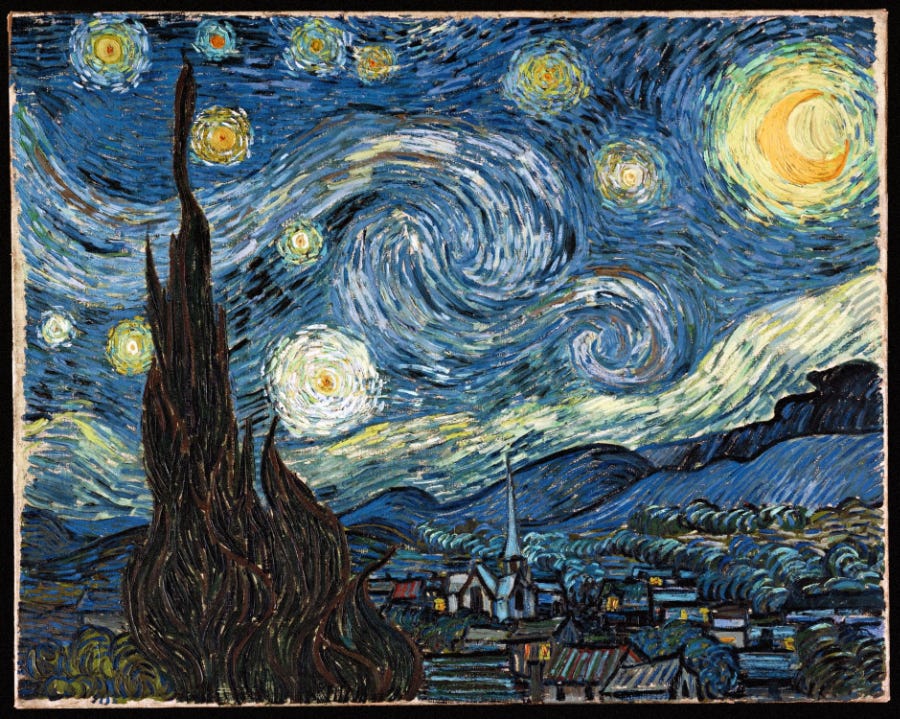
“Starry Night” by Vincent Van Gogh
This idea that not only is there an objective “right” but one that all should work towards is something C.S. Lewis identified as universal across all cultures which he labeled as the “Tao” or “the doctrine of objective value, the belief that certain attitudes are really true, and others really false, to the kind of thing the universe is and the kind of things we are.”[7] While the idea of a good and a perfection that we should all be seeking is a universal desire, the idea of good gods is not. As Thomas Weinandy explains in his essay, “Irenaneus and the Imago Dei,” “Within classical paganism, it was the gods who were modeled after the image and likeness of men and women and, in so being depicted, they possessed all of the foibles, weaknesses, and vices that human beings possess.[8] “ As ancient humans created gods in their own image, so do modern humans create AI in the world of The Matrix.
But what happens to the Imager when the Image is flawed? As Louis Markos writes in Apologetics for the 21st Century
Only a God who is separate from his creation can function as the Guide and Embodiment of pure moral goodness. If pantheism is correct and God is indistinguishable from his creation, then he can neither be good nor evil--he can only be an amoral spiritual force. In pantheistic religions, the gods do not live outside time and space but are themselves born out of the primal (material) chaos, they do not embody either a holy or universal standard and thus cannot serve as the source of our idea of the good.[9]
In other words, there is no good without God and there is nothing to have mercy towards. A being can be no better than the one who formed it, and the AI of the Matrix could be no better than the humans that developed its logic and code. Flawed human values would be its values. The human’s moral imperative, its imperative. As we see, the AI race followed in the footsteps of its makers exactly, whatever they were given … it was “never enough.”
The crux of the dilemma in The Matrix spotlights the failings of the values of Western society. Judeo-Christian values spawned the idea of individual rights that are equal to all.[10] This equality of persons is also not something common to all historical human experience or in all religions.[11] Buddhism teaches that there are levels of enlightenment, and one is condemned to repeat their life lesson until that lesson is learned.[12] A stratification of society is embedded into Hinduism with the varnas or castes.[13] But this specialness of not only the human race, but the preciousness of the individual sparkles like gemstones throughout the pages of the Hebrew scriptures. God cares about man himself.[14] God tabernacles among man and man images God himself.[15] It is this last statement that guarantees value to every man.
But in the move from looking to God as the source of the image to man as the source, the humanists of the Enlightenment left God and focused on man alone. Without God as the grounding, the individual man is left as supreme authority, and as Lewis warns, without that Divine grounding, there is nothing in man to check himself. The grounding Good is removed and man’s own wants and desires are seen as the ultimate goal.
The desire to seek remains, but when there is nothing left but man, something must still be sought, leaving man to seek things. This is the fruit of the Enlightenment and it is this avaricious seeking we see in the writings of John Locke that so influenced the foundation of the United States. The goals of “life, liberty and the pursuit of happiness” draw strongly from Locke’s Two Treatises on Government.[16] Locke argues for autonomy of the individual and the idea of a right that transcends temporal powers.[17] He justified the upending of monarchies that did not have the welfare of citizens as the highest good; believing that when they abdicated their responsibility to their citizens, they also abdicated their authority.[18] Locke is often considered as the instigator of the American Revolution.[19] It was on the basis of his writings that colonists not only saw their move towards self-determination as justified, but even a moral imperative.[20]
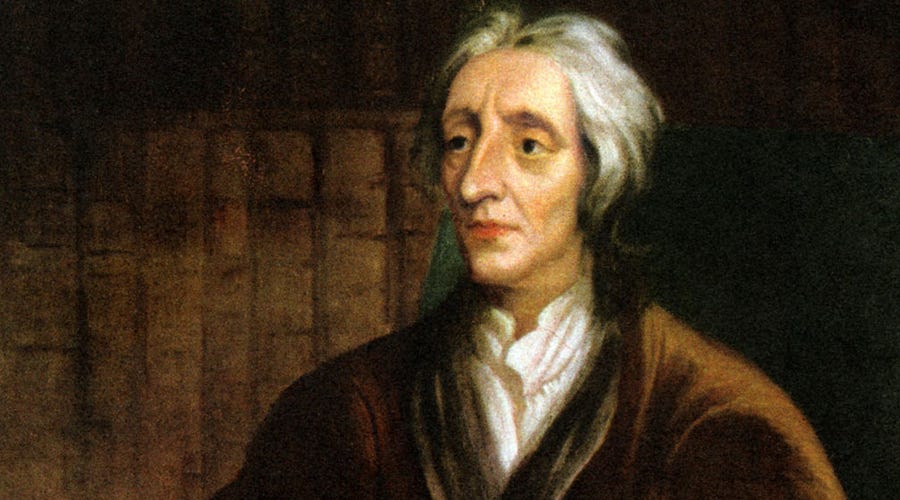
John Locke (1632-1704)
However, it is also in the words of Locke that slavery and viewing humans as property – of “things” to be used and disposed of at will.[21] He writes at length at the dominion over the earth, the “things,” as God-given, and not to a particular man or a particular group, but to all men.[22] All, but not quite all.
Locke saw property rights as the greatest good. If the motto of the new nation was “life, liberty, and the pursuit of happiness,” according to Locke, that happiness was found in things. The message of Two Treatises is that life is about having the liberty to pursue one’s own happiness by obtaining property . . . even at the expense of another’s liberty.[23] Locke believed in self determination, but not for all. He justified slavery arguing that the slave had forfeited his freedom and that all he argued for did not apply to the slave.[24]
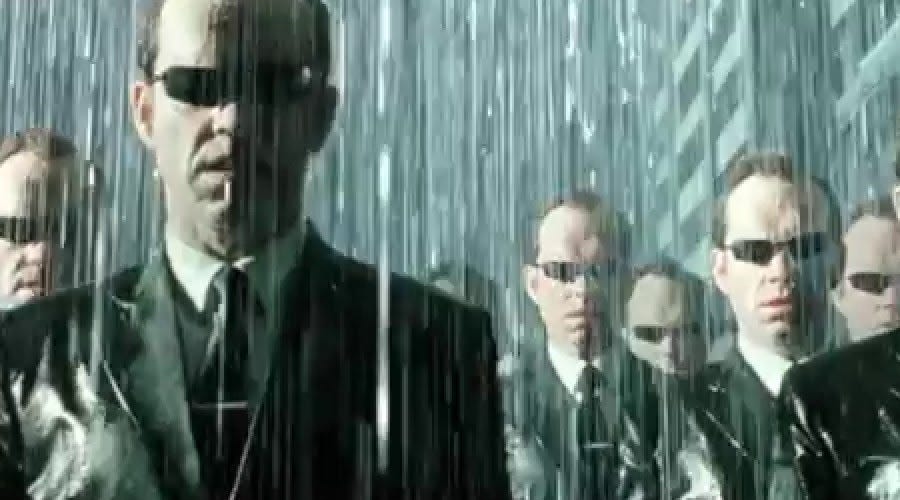
The Matrix, set in the U.S. with its ideological foundations of obtaining at any cost, is a natural end to this individualistic mindset. It was just as C.S. Lewis warned in The Abolition of Man, “But the man-moulders of the new age will be armed with the powers of an omnicompetent state and an irresistible scientific technique: we shall get at last a race of conditioners who really can cut out all posterity in what shape they please.[25]” There came a time when the interests of the human and AI races clashed. When the offspring of the human race became too much of a threat, humans tried to annihilate their creation by destroying the sun. In a move worthy of the race they imaged, AI reflected human ingenuity finding a new source for survival enslaving and feeding off the humans who made them. AI rejected and abused their makers, just as humans rejected and killed their Source.[26]
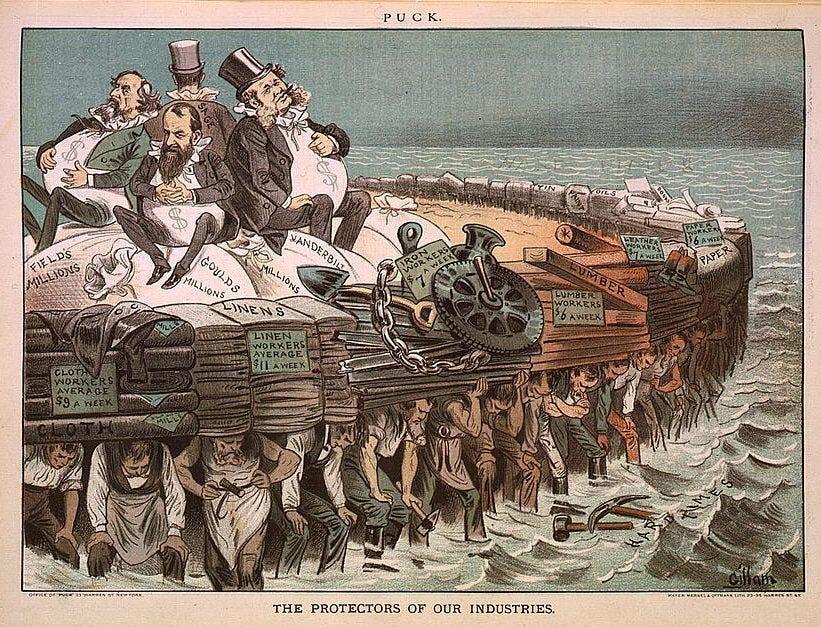
“Protectors of our Industries” Published in Puck (1883). From Bowdoin University, “This image captures the public’s frustration with the parasitic power dynamic between the industrial giants and the working class.” Read more.
Ethical Grounding and Society
When property becomes the prime directive, ethics become relative. In a study on ethical ideologies, D.R. Forsyth notes that as an individual’s income increased they tended to become “situationalists;” they believe that there is right and wrong, but do not accept a universal right.[27] The implication is that while they may very strongly believe that there is a right, without an absolute standard of rightness outside of themselves, their “right” becomes centered in themselves. This becomes a conflict for society as a whole when a particular person or group has the power to preserve their rights at the expense of others. As theologian John Stott observes, "Nearly all legislation has grown up because human beings cannot be trusted to settle their own disputes with justice and without self-interest."[28] Without a grounding in an absolutely just Good, we are left to the will of those who can control the most. As the hrossa in Out of the Silent Planet by C.S. Lewis note on the futility of trying to live without a Lawgiver. “They are like one trying to lift himself by his own hair—or one trying to see over a whole country when he is on a level with it—like a female trying to beget young on herself.”[29] We cannot give what we do not have. The greedy cannot give equity. The exploiters cannot give justice. Without a Great Good, an “I AM,” we are, like the humans of the matrix, left to the mercy of whoever is willing to be the most ruthless.
We cannot give what we do not have. The greedy cannot give equity. The exploiters cannot give justice. Without a Great Good, an “I AM,” we are, like the humans of the matrix, left to the mercy of whoever is willing to be the most ruthless.
Ethics as a Path to True Purpose
The heritage of Locke is one centered on acquisition, domination, and things. However, this is not the sole heritage the U.S. can claim. Before John Locke, there was John Winthrop. He and his fellow colonists were equally concerned about freedom: but it was not the freedom to acquire, but the freedom of worship. A Puritan who had experienced the Divine Presence, his exodus to what he saw as a new promised land was prompted by religious persecution under Charles I. This desire to seek God without coercion or control was Winthrop’s motivating force.[30] He believed prosperity — the things — would be there for them, but as a side effect, a benefit, of the obedience to and relationship with God.[31] Winthrop’s vision can also be seen in the American dream of “life, liberty, and the pursuit of happiness;” however, in his view the goal was not things, the goal was God.
“America, the City on a Hill and the Pursuit of Happiness,” Read on Raised to Walk
The entirety of U.S. history can be seen as a battle between these two visions of Locke and Winthrop: brotherhood versus domination, mammon versus self-sacrifice, and man’s good versus the Good of God. The desire for acquisition, the “never enough,” can be seen behind every area of civil strife in the nation: the genocide against the indigenous peoples, the stain of slavery and the still gaping wound of the Civil War, the financial collapses from the 19th century to the present caused by speculators, and the current exploitation by inhuman corporations extracting the life-blood of the masses. The image of a sea of captive humans with their life force being leached from them until they had no value to the matrix is shocking. But it is shocking that an inhuman entity would do to humans what humans do to each other? The Imager can be no better than the Image. The Matrix imagines a logical end to unscrupulous human beings dominated by their own merciless creation.
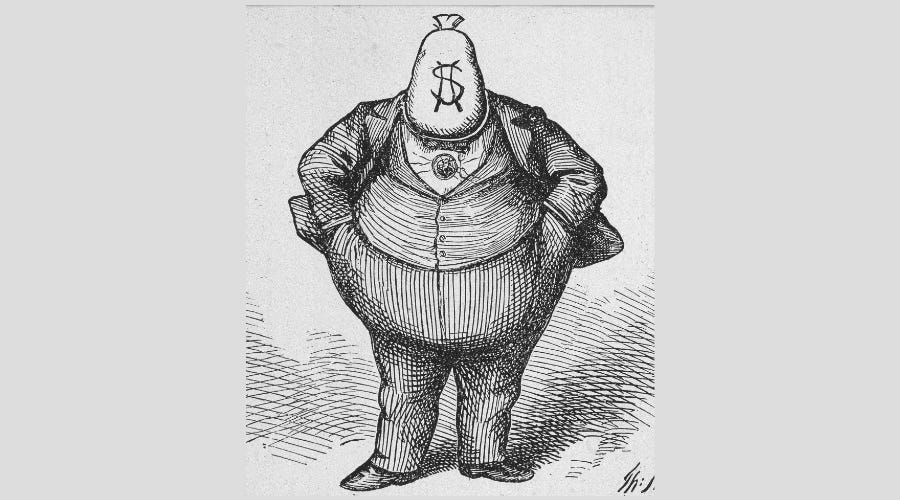
A political cartoon by Thomas Nast published by Harper’s Weekly (1871) mocking political boss and corrupt industrialist, William M. Tweed, also known as “Boss Tweed.” Read how Nast helped bring Tweed to justice through his biting art. More political cartoons from the Gilded Age.
Breaking the Matrix
CYPHER
Just between you and me, you don't
believe it, do you? You don't
believe this guy is the one?
TRINITY
I think Morpheus believes he is.
CYPHER
I know. But what about you?
TRINITY
I think Morpheus knows things that
I don't.
CYPHER
Yeah, but if he's wrong —
The human race, both those plugged in and unaware as well as those fighting it, are trapped in a prison of their own devising. But in this humanistic dystopia, the gleam of “other” shines through. There is a prophecy of “The One” who will break the power of the matrix and free the human race. They will be able to live in the city of Zion in peace. It is based on this promise that Morpheus calls out Neo from his bondage within the matrix. He believes Neo is the One so strongly that he is willing to sacrifice his own life to save Neo’s. This Messianic theme is so evident, moviegoers have remarked, “When I was watching the film, I kept getting Messianic feels, like how someone is destined to swoop in and save everyone.”[32]
The ending is also Messianic — Christlike — a sacrificial death, a resurrection through the power of love, and an overcoming so complete of the Agents of the matrix in a scene reminiscent of the Harrowing of Hell, that the matrix loses all power over Neo. In a sense, “all authority” has been given to Neo, both in the matrix and without.[33]
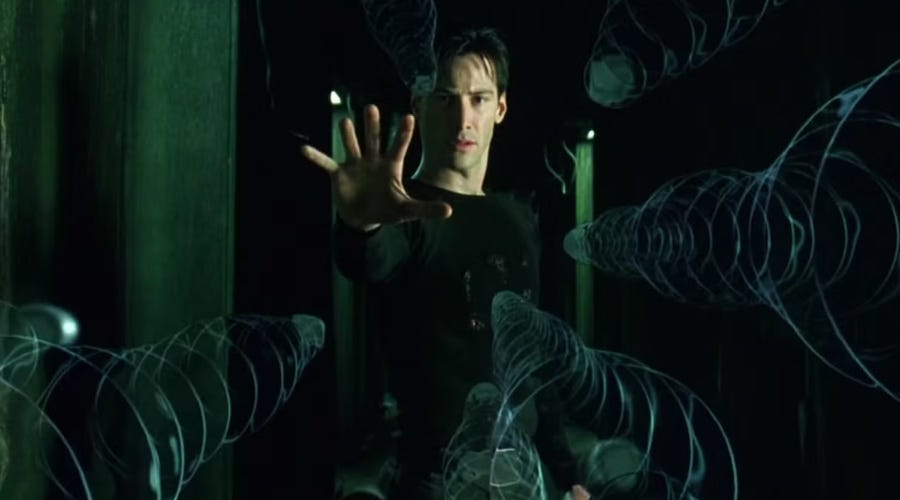
After the Breaking: The New Beginning
One has to wonder if Neo is successful in dismantling the matrix, what is next? If the AI overlords are defeated, will the human race fare any better? It seems the Watchowski’s did not have an answer to that question either. Matrix Reloaded (2003) and Matrix Revolution (2003) descend into nihilism with the enemy losing its teeth, the hero his purpose, and the viewers the end vision of true deliverance.[34] When there is nothing outside of the world, there is nothing but the world to look to. There is no escape and nowhere to go and so the Watchowskis’ reboot to the beginning. For all its Messianic beginnings, the trilogy ends in Buddhist purposelessness. What was the meaning of it all if it all ends as it began?
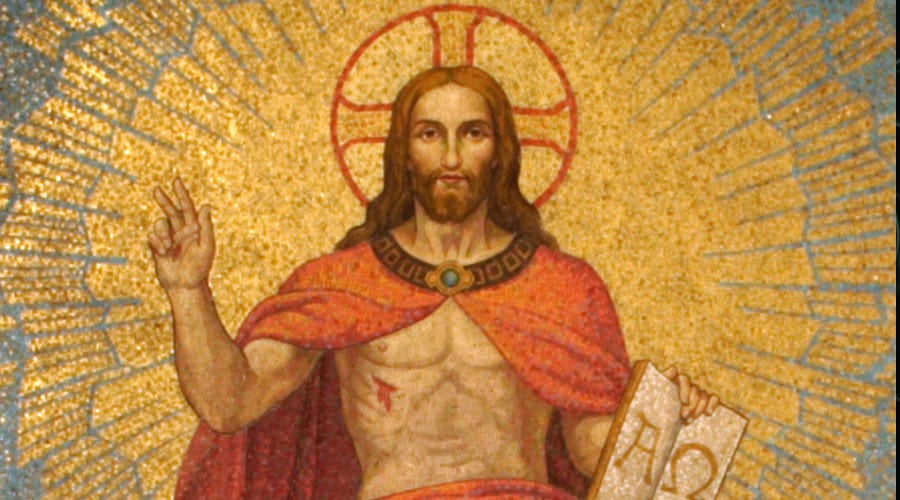
The Matrix can show us the danger of a relativistic worldview giving warning of where our avaricious path may lead, but it cannot give us a vision of hope. For that we must look to the One who is “the Son of God, this the Only-begotten, this the Former of all things, this the true Light who enlighteneth every man, this the Creator of the world, this He that came to His own, this He that became flesh and dwelt among us”[35] Like Neo who overcame the hold of the matrix, Jesus became one of us to break the hold of our own matrix, the power of sin.[36]
Await Him that is above every season, the Eternal, the Invisible, who became visible for our sake, the Impalpable, the Impassible, who suffered for our sake, who endured in all ways for our sake.[37] - Ignatius of Antioch
About “Ethics of the Matrix”
An edited version of this essay was published in the Summer 2020 issue of An Unexpected Journal: Science Fiction. We had to fill a gap in the issue in a short amount of time, so I wrote it in a hurry. There was pushback on the section on Locke and capitalism. The editor’s comment was that “Locke was more nuanced.” We didn’t have time to work through the section, so it was cut.
I still have the same opinion today that I did four years ago and so I’m publishing the original, unedited version of the essay here. I did go back and add footnotes to the section on Locke, but other than that, this is the raw version.
Recommended Resources
Movies
The Matrix (1999)
Matrix Reloaded (2003)
Matrix Revolution (2003)
On Humanity
The Abolition of Man (1943) by C.S. Lewis
After Humanity (2021) by Michael Ward
Thomas Aquinas: Selected Writings (1999) by Penguin Classics
Logos: A Journal of Catholic Thought and Culture. Volume 6, Number 4, Fall 2003 This article quotes from "St. Irenaeus and the Imago Dei: The Importance of Being Human;" However, there are a number of articles in the issue that deal with humanity and personhood.
Apologetics for the 21st Century (2010) by Louis Markos
Basic Christianity by John Stott
Out of the Silent Planet (1938) by C.S. Lewis
On American History & Ideology
Two Treatises on Government (1689) by John Locke
"The Role of Christian Belief in Public Policy" (2007) by Robert D. Orr
"Consumer Ethics: The Role of Religiosity" by Scott J. Vitell and Joseph G. P. Paolillo
"Consumers' Ethical Beliefs: The Roles of Money, Religiosity and Attitude toward Business" (2007) by Scott John Vitell, Jatinder J. Singh, and Joseph Paolillo
"The Political Cartoonist Who Helped Lead to ‘Boss’ Tweed’s Downfall" (2022) by Dave Roos - Thomas Nast gleefully mocked the Tammany Hall boss in multiple cartoons, prompting newspapers and authorities to investigate.
"Gilded Age Political Cartoons" (2020) by Casey Goldberg, Bowdoin University
"The Art of the Fat Cat" (2014) by Matt Wuerker, Politico Magazine
“America: The City on a Hill and the Pursuit of Happiness” (2020) by Carla Alvarez
[1] Wachowski, Andy, Larry Wachowski, Keanu Reeves, Laurence Fishburne, and Carrie-Anne Moss. The Matrix. Burbank, CA: Warner Home Video, 1999.
[2] Ibid.
[3] Ecclesiastes 3:11
[4] Thomas Aquinas, Trans. Ralph McInery. “On Goodness and the Goodness of God,” in Thomas Aquinas: Selected Writings. (New York: Penguin Classics, 1999) 345.
[5] Ibid. 5.
[6] Ibid.
[7] C.S. Lewis, The Abolition of Man (1943; repr. New York, NY: HarperCollins, 2001) 18.
[8] Thomas G. Weinandy, “St. Irenaeus and the Imago Dei: The Importance of Being Human,” Logos 6, no. 4 (2003): 16.
[9] Louis Markos. Apologetics for the 21st Century. (Wheaton, IL: Crossway, 2010) 33.
[10] Robert D. Orr, “The Role of Christian Belief in Public Policy,” Christian Bioethics: Non-Ecumenical Studies in Medical Morality 13, no. 2 (2007).In a discussion on human rights and public policy, Orr notes that in a discussion among those who held orthodox views from the Abrahamic religions that "a foundational belief in the sovereignty of God and the sanctity of human life based on the imago Dei was clear in all three faith traditions, and this led to very similar positions on matters of public policy."
[11] “Religion and Power: Divine Kingship in the Ancient World and Beyond,” The Oriental Institute of the University of Chicago, last modified 2007, accessed June 6, 2020,https://oi.uchicago.edu/research/symposia/religion-and-power-divine-kingship-ancient-world-and-beyond-0.At the 2007 symposium of The Oriental institute of the University of Chicago, scholars examined the “near universal” belief among ancient cultures of kingship tied to divinity. There was a built-in stratification of society where some were “more” (the kings ruling by divine right) and others much less.
[12] Dale Debakcsy. “The dark side of Buddhism.” New Humanist. Published January 23, 2013. Accessed March 5, 2016. https://newhumanist.org.uk/articles/4021/the-dark-side-of-buddhismAn account from an atheist on teaching at a Buddhist school on the psychological impact of karma. "At first glance, karma is a lovely idea which encourages people to be good even when nobody is watching for the sake of happiness in a future life. It's a bit carrot-and-stickish, but so are a lot of the ways in which we get people to not routinely beat us up and take our stuff. Where it gets insidious is in the pall that it casts over our failures in this life. I remember one student who was having problems memorising material for tests. Distraught, she went to the monks who explained to her that she was having such trouble now because, in a past life, she was a murderous dictator who burned books, and so now, in this life, she is doomed to forever be learning challenged. Not, "Oh, let's look at changing your study habits", but rather, "Oh, well, that's because you have the soul of a book-burning murderer. "To our ears, this sounds so over the top that it is almost amusing, but to a kid who earnestly believes that these monks have hidden knowledge of the karmic cycle, it is devastating. She was convinced that her soul was polluted and irretrievably flawed, and that nothing she could do would allow her to ever learn like the people around her. And this is the dark side of karma – instead of misfortunes in life being bad things that happen to you, they are manifestations of a deep and fundamental wrongness within you. Children have a hard enough time keeping up their self-esteem as it is without every botched homework being a sign of lurking inner evil."
[13] Jayaram V, “The Hindu Varna System,” Hindu Web, accessed June 6, 2020, https://www.hinduwebsite.com/hinduism/concepts/varna.asp.“The Vedic society in the early days of its formation had four Varnas namely Brahmanas, Kshatriyas, Vaisyas and Shudras. They were not equal in status, although created by the same source, but part of a krama or order. Brahmanas occupied the highest position, as gods upon earth. Except in certain Vedic rituals, where they had to sit below the king, their position in society was unassailable. Kshatriyas were next. They had the right to claim the authority of God to rule upon earth as his representatives and enforce laws. Vaishyas came later, and Shudras were the last.”
[14] Psalm 8:3-4 NIV
When I consider your heavens, the work of your fingers, the moon and the stars, which you have set in place, what is mankind that you are mindful of them, human beings that you care for them?
[15] John 1:14 TLV: And the Word became flesh and tabernacled among us. We looked upon His glory, the glory of the one and only from the Father, full of grace and truth.Ephesians 2:10 NLT
For we are God’s masterpiece. He has created us anew in Christ Jesus, so we can do the good things he planned for us long ago.
[16] John Locke, Two Treatises on Government. II.6. "The state of Nature has a law of Nature to govern it, which obliges every one, and reason, which is that law, teaches all mankind who will but consult it, that being all equal and independent, no one ought to harm another in his life, health, liberty or possessions; for men being all the workmanship of one omnipotent and infinitely wise Maker; all the servants of one sovereign Master, sent into the world by His order and about His business; they are His property, whose workmanship they are made to last during His, not one another’s pleasure."
[17] Ibid., VI.21. Locke's assertion of man's absolute right to self-determination is a foundation of modern libertarianism. "The natural liberty of man is to be free from any superior power on earth, and not to be under the will or legislative authority of man, but to have only the law of Nature for his rule. The liberty of man in society is to be under no other legislative power but that established by consent in the commonwealth, nor under the dominion of any will, or restraint of any law, but what that legislative shall enact according to the trust put in it. Freedom, then, is not what Sir Robert Filmer tells us: 'A liberty for every one to do what he lists, to live as he pleases, and not to be tied by any laws'; but freedom of men under government is to have a standing rule to live by, common to every one of that society, and made by the legislative power erected in it. A liberty to follow my own will in all things where that rule prescribes not, not to be subject to the inconstant, uncertain, unknown, arbitrary will of another man, as freedom of nature is to be under no other restraint but the law of Nature."
[18] Ibid., VII.21. Locke's assertion of man's absolute right to self-determination is a foundation of modern libertarianism. "Wherever, therefore, any number of men so unite into one society as to quit every one his executive power of the law of Nature, and to resign it to the public, there and there only is a political or civil society. .. And hence it is evident that absolute monarchy, which by some men is counted for the only government in the world, is indeed inconsistent with civil society, and so can be not form of civil government at all."
[19] Joseph Loconte, “1776: A Lockean Revolution,” National Review, July 4, 2021, accessed November 16, 2024. https://www.nationalreview.com/2021/07/1776-a-lockean-revolution/.
[20] Locke, Two Treatises. II.8, 13. A large portion of Two Treatises is a discussion on the Natural or Moral law applied to society and civil government. in Chapter 2, section 13, Locke argues that an absolute monarch that violates the natural law is no better than that a criminal and "the state of Nature is therefore not to be endured." In a previous section (II.8) Locke states that "every man hath a right to punish the offender, and be executioner of the law of Nature" and that executing justice is an obligation to God. Locke is not advocating for vigilante justice; however, he does insist that justice must be found in society.
[21] Ibid., II.6.
[22] Ibid.,. I.2. Two Treatises on Government is a thought exercise of political power and what grounds that power. Is power authorized in the law of the land or is there a greater power and greater rule of law to which laws of all lands must conform? Reading through Two Treatise, Locke does argue for a moral law and provides a foundation for a "righteous revolution" in cases where men are treated unjustly by absolute monarchs. The phrase "absolute dominion" is found eleven times in the text. Locke believed the individual had absolute dominion over most things. He was a man of democracy and of equality. However, as you read through the text, I think you will also find that this equality did not extend to everyone in Locke's mind. His "all are equal" is not all of humanity, it is certain classes of people. Slaves and women are not included in Locke's "all." There is much good thought in Two Treatises; however, within it also are the seeds of the inequity that we still battle in the U.S. today. "I think it may not be amiss to set down what I take to be political power. That the power of a magistrate over a subject may be distinguished from that of a father over his children, a master over his servant, a husband over his wife, and a lord over his slave."
[23] Ibid., II.6.
[24] Ibid., VII.85. "But there is another sort of servant which by a peculiar name we call slaves, who being captives taken in a just war are, by the right of Nature, subjected to the absolute dominion and arbitrary power of their masters. These men having, as I say, forfeited their lives and, with it, their liberties, and lost their estates, and being in the state of slavery, not capable of any property, cannot in that state be considered as any part of civil society, the chief end whereof is the preservation of property."
[25] Lewis, The Abolition of Man, 69.
[26] Isaiah 53:3-5 NIV
3 He was despised and rejected by mankind,
a man of suffering, and familiar with pain.
Like one from whom people hide their faces
he was despised, and we held him in low esteem.
4 Surely he took up our pain
and bore our suffering,
yet we considered him punished by God,
stricken by him, and afflicted.
5 But he was pierced for our transgressions,
he was crushed for our iniquities;
the punishment that brought us peace was on him,
and by his wounds we are healed.
[27] Scott J. Vitell and Joseph G. P. Paolillo, “Consumer Ethics: The Role of Religiosity,” Journal of Business Ethics 46, no. 2 (2003): 158.
[28] John R.W. Stott. Basic Christianity. (Grand Rapids, MI: William B. Eerdman’s Publishing Co, 1958.) 61
[29] C.S. Lewis, Out of the Silent Planet, Space Trilogy, Book One edition. (1938, repr. New York, NY: Scribner, 2002) 102.
[30] Jeremiah 29:11-13 NIV
11 For I know the plans I have for you,” declares the Lord, “plans to prosper you and not to harm you, plans to give you hope and a future. 12 Then you will call on me and come and pray to me, and I will listen to you. 13 You will seek me and find me when you seek me with all your heart.
[31] John Winthrop, “‘City on a Hill’ Sermon,” last modified 1630, accessed March 31, 2020, https://courses.lumenlearning.com/suny-tc3-ushistory1os/chapter/primary-source-john-winthrop-dreams-of-a-city-on-a-hill-1630/.
Winthrop’s belief in what was required for the new nation to prosper:
“Now the only way to avoid this shipwreck, and to provide for our posterity, is to follow the counsel of Micah, to do justly, to love mercy, to walk humbly with our God. For this end, we must be knit together, in this work, as one man. We must entertain each other in brotherly affection. We must be willing to abridge ourselves of our superfluities, for the supply of others’ necessities. We must uphold a familiar commerce together in all meekness, gentleness, patience and liberality. We must delight in each other; make others’ conditions our own; rejoice together, mourn together, labor and suffer together, always having before our eyes our commission and community in the work, as members of the same body. So shall we keep the unity of the spirit in the bond of peace.”
[32] Veronica Kordmany, “The Secret Jewish History of The Matrix,” Hillel International, last modified December 19, 2019, accessed March 31, 2020, https://www.hillel.org/about/news-views/news-views---blog/news-and-views/2019/12/19/the-secret-jewish-history-of-the-matrix.
[33] Psalm 110:1 NIV
The Lord says to my lord:
“Sit at my right hand
until I make your enemies
a footstool for your feet.”
Isaiah 9:6 NIV
For to us a child is born,
to us a son is given,
and the government will be on his shoulders.
And he will be called
Wonderful Counselor, Mighty God,
Everlasting Father, Prince of Peace.
1 Corinthians 15:20-25 NIV
20 But Christ has indeed been raised from the dead, the firstfruits of those who have fallen asleep. 21 For since death came through a man, the resurrection of the dead comes also through a man. 22 For as in Adam all die, so in Christ all will be made alive. 23 But each in turn: Christ, the firstfruits; then, when he comes, those who belong to him. 24 Then the end will come, when he hands over the kingdom to God the Father after he has destroyed all dominion, authority and power. 25 For he must reign until he has put all his enemies under his feet. 26 The last enemy to be destroyed is death. 27 For he “has put everything under his feet.”
[34] Derek Draven, “10 Reasons Why The Matrix Revolutions Disappointed Fans,” ScreenRant, last modified March 16, 2020, accessed June 6, 2020, https://screenrant.com/why-matrix-revolutions-disappointed/.
[35] Irenaeus, Against Heresies 9.2 (ANF 1).
[36] Deuteronomy 18:15 NASB
“The Lord your God will raise up for you a prophet like me from among you, from your countrymen, you shall listen to him."
Isaiah 43:11 NASB
“I, even I, am the Lord,
And there is no savior besides Me."
Hebrews 2:14-15 NASB
14 Therefore, since the children share in flesh and blood, He Himself likewise also partook of the same, that through death He might render powerless him who had the power of death, that is, the devil, 15 and might free those who through fear of death were subject to slavery all their lives.
[37] Ignatius, Ignatius to Polycarp 3.2 (ANF 1).